 Much of the federal government’s immigration crackdown has focused on the families and individuals directly impacted. However, immigration efforts are also making it more difficult for employers in Michigan and elsewhere around the country to find qualified applicants and willing workers for certain roles.
A report from the Economic Policy Institute (EPI) in July 2025 estimated that if enforcement were scaled up by deporting an average of one million people annually over the next four years, employment would decline by 3.3 million employed immigrants and 2.6 million employed U.S.-born workers.
Furthermore, Pew Research Center highlighted preliminary Census Bureau-derived data from Jan. 1 through July 31 to show that more than 1.2 million immigrants, both legal and undocumented, exited the U.S. labor force during that seven-month period.
Perhaps the most significant legal impact on immigration in recent months is the pending H-1B litigation likely to limit the number of foreign nationals available and willing to move to the U.S. for a new job, according to Miller Canfield Principal Julianne Cassin Sharp, who leads the firm’s immigration practice team.
The American Immigration Lawyers Association, the national professional organization for attorneys and law professors who practice and teach immigration law in the U.S., filed lawsuits challenging the U.S. Citizenship and Immigration Services (USCIS) fee-rule under the Trump Administration.
That filing also questions the administration’s immigration proclamations that significantly restricted visa issuance.
The debate is over a presidential proclamation titled “Restriction on Entry of Certain Nonimmigrant Workers” issued in September that mandates, among other things, a payment of $100,000 in order for certain H-1B visa petitions to be eligible. This fee is in addition to the usual H-1B application/petition fees. It has been described by the White House as a “one-time payment” tied to the filing of a new H-1B petition under specified circumstances.
Opponents of the proclamation claim that it severely restricts the ability for companies to recruit talented foreigners. Cassin Sharp said that if this fee holds, few companies, outside of some large high-tech firms, will elect to pay it. Some recent updates in October seem to clarify that students visiting from foreign countries can start working in the U.S. without paying this fee, among other updates.

Miller Canfield Principal Julianne Cassin Sharp leads the firm’s immigration practice team.
“We’ve just received more clarity that indicates the (restrictions) are kinder to employees,” Cassin Sharp said. “But there’s still more we need to understand. There’s still a (desire) for more clarity for any employer who seeks to hire workers from outside of the country.”
Despite a growing list of exemptions to this fee, the industries most impacted by related laws include automotive, manufacturing, IT and high-tech industries that are recruiting white-collar talent that can be hard to find domestically, Cassin Sharp said. Many of these foreign recruits have growing expertise in AI that can support U.S.-based companies.
“People are waiting to see how this plays out, pending litigation with the $100,000 fee,” Cassin Sharp said. “How much more will (the law) be modified?”
Confusion is prevalent for some employers
The challenge for the manufacturing industry, and many industries recruiting engineers and other highly paid, skilled workers from foreign countries, is the uncertainty of the administration’s current immigration policies, said Michigan Manufacturing Association President and CEO John Walsh. He said the H-1B visa process is known for uncertain pathways through both of President Donald Trump’s administrations and former President Joe Biden’s administration.
While Walsh admitted he does not have specific data to quote, he is aware of anecdotal evidence and general concerns that members have about the ability to hire foreign nationals in this environment.
“Whether it’s the fact that (foreign candidates) are uninterested or once hired that they could get deported, it’s an issue,” Walsh said. “There is a desire among (manufacturers) for a more predictable immigration plan. They want to know with some level of assurance that these (job candidates) are available.”
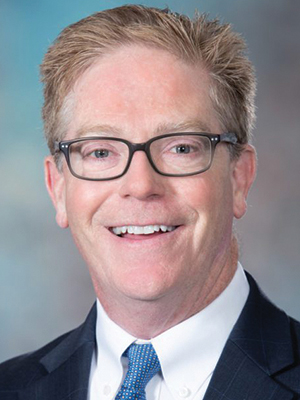
Michigan Manufacturing Association President and CEO John Walsh.
Many industries — especially in technology, healthcare, engineering, and manufacturing — face shortages of skilled workers. When employers can’t find enough qualified candidates domestically, hiring foreign professionals ensures that essential roles are filled so production, innovation, and services can continue, Walsh said.
Retail employs about 510,000 workers in Michigan. Hiring has improved in some areas within the industry since the onset of Covid, but good workers are always needed, said Andrew Beardslee, Vice President, Government Affairs for the Michigan Retailers Association. He says most of the immigration enforcement the MRA has seen centers on agriculture, hospitality and construction.
“Retail isn’t exempt from that, but MRA represents retailers of many types and sizes, so this really depends on the retailer and the location,” Beardslee said. “But, yes, our members always prioritize the safety of their employees and customers alike, so if there is law enforcement action on the property there’s always a degree of caution about the potential impact to the people in the store.”
Despite the increased enforcement, MRA and its federal partners at the National Retail Federation want members to be able to legally hire immigrants of all skill levels, Beardslee said. “(We) would support a comprehensive immigration policy that understands how good retail jobs can be an attraction.”
The potential of a raid on a retail employer is something the MRA recommends its members be ready for. Beardslee says that business owners should stay informed, know the laws, help employees stay document-ready, and cooperate with law enforcement. “Still, we are working with our federal partners to advocate for practical immigration reform,” he said.
Michigan is home to more than 90,000 retail establishments. The MRA encourages consumers to keep their money in the state and employers to hire to fill its needs. The association markets the fact that there’s an enormous impact on jobs and the economy that comes from shopping local, but local business owners also need to have the resources needed to hire for important positions.
Deportations of workers will eliminate millions of jobs held by immigrant and U.S.-born workers, according to research on increased immigration enforcement by the Economic Policy Institute, a nonprofit, nonpartisan think tank based in Washington, D.C. The EPI released a study in July that predicted employment in the construction sector will drop 861,000, and immigrant employment will fall by 1.4 million.
Furthermore, the EPI suggested that deportations will eliminate an estimated 500,000 childcare jobs and that the largest states, notably California, Florida, New York, and Texas, will have the highest number of job losses because of such immigration policy.
CBS News in Chicago detailed recent scenarios where employees were detained by ICE at their workplace in an early November article. For example, the La Providencia grocery store had an employee detained by immigration officials in mid-October, according to owner Humberto Franco. “He was, like, two steps inside already when they just grabbed him and pulled him out,” Franco told the media outlet, adding that these raids have not only adversely impacted his business but have reduced the pool of potential employees to fill positions.

Andrew Beardslee is Vice President, Government Affairs for the Michigan Retailers Association.
Changes in H-1B add to employer stress
The H-1B program allows U.S. employers to hire foreign professionals in specialty occupations — typically roles requiring at least a bachelor’s degree (e.g., engineers, software developers, scientists, accountants).
Cassin Sharp believes given the current uncertainty, some of the people who weren’t selected in the lottery last year will plan to file a change in status, which would preclude the from the $100,000 fee, this year.
Because demand exceeds the annual cap, which currently is 85,000 new visas (20,000 for foreigners with advanced degrees) per fiscal year, USCIS conducts an electronic lottery to select which registrants may file full petitions. Each U.S. employer petitioning must register electronically with U.S. Citizenship and Immigration Services (USCIS) during the official registration window, often starting in March. There is a $10 registration fee for each application.
Some industries still have trouble filling roles, especially in Michigan
Walsh believes that hiring foreign nationals who are willing to bring their skills to the U.S. on a permanent basis is both appropriate and important to the health of the manufacturing industry. One benefit for Michigan employers is that hiring highly skilled foreign workers can help make up for the aging labor market in the state.
“We have an express need for engineers here,” Walsh said. That’s because many established engineers are retiring while younger talent, often newly out of college, are choosing to move out of Michigan. That may be for reasons of perception or personal choice. While Walsh doesn’t believe many states have more manufacturing job opportunities per capital than Michigan, the perception can be that the there is more stability in other states.
Another industry adversely impacted by attempts to limit immigrants and foreign workers from the U.S. is higher education, Cassin Sharp said. Universities often recruit academics from outside the U.S. because it is difficult for the institutions to find the number of qualified instructors and researchers they seek at home.
“(These immigration actions) are impacting their ability to recruit, which means they may have to go with less qualified candidates,” Cassin Sharp said. Some of these desired recruits from foreign countries have specific experience in AI, engineering and any of the STEM sectors. “No industry that seems talent is off limits from the impact here.”
It’s not just manufacturing or higher education professionals either. MMA members regularly express their need for to hire talent in other areas of a manufacturing business, such as human resources and finance professionals and truck drivers. Both white- and blue-collar workers are needed, and the roles aren’t always filled by domestic workers.
“We’ve heard this often,” Walsh said. “Manufacturers aren’t shy about sharing their opinions with us.”
Construction Association of Michigan (CAM) President Kevin Koehler has not personally heard of members express concern about challenges with hiring for open positions or keeping employees that may be foreign bound. However, CAM’s members are generally on the commercial side of the business. CAM is one of the oldest and largest regional construction associations in North America.
“If it’s a hot button topic, generally I will her from members and they’ll want us to get (involved),” Koehler said.
Koehler however has communicated with network contacts that hiring trends may have been impacted more significantly on the residential construction sector and in the large, commercial landscaping space.
“It’s still concerning,” Koehler said. “We don’t want to affect anything that (shrinks) the talent pool available within our field.”
Like other blue-collar sectors, construction is undergoing a labor market shift where many of its most experienced workers are at or near retirement age. The commercial construction industry already struggles with shortages given the number of retiring workers from the late Baby Boomer generation and the lack of interest in construction from many young people.
A 2024 Michigan Contractor & Builder survey indicated that 54 percent of contractors reported project delays due to workforce shortages. Another 62 percent of professional contacted said that many candidates are not qualified for open roles, because they lack necessary skills or certifications.
Fortunately, that is changing with active efforts to educate young people about how they can earn while they learn, Koehler said, and build a successful, six-figure career. Yet, Koehler doesn’t rule out the possibility that current immigration policies could create more labor market challenges for the commercial construction industry in Michigan.
“I haven’t heard many professionals express concerns – yet,” Koehler said.
Representatives from the Michigan Restaurant and Lodging Association (MRLA) did not respond to multiple messages for comment on this topic, but its leadership, including President and CEO Justin Winslow is on the record saying there aren’t enough local workers in some parts of Michigan to staff resorts, restaurants and the seasonal economy. Winslow has been quoted in various media outlets over the last few years.
Winslow was quoted in a May 2022 press release indicating that more than 80 percent of restaurant and hospitality business owners in Michigan were operating with inadequate labor supply to meet demand. “We believe a targeted campaign to educate, train and recruit a world-class hospitality workforce is needed to meet the unmet demands of our tourism-driven state,” Winslow said at the time.
One way manufacturers have already addressed the lack of talent for many open positions is to hire returning citizens for some roles. MMA members have recognized that there are many community programs that support former prisoners who want to reenter the workforce following their incarceration. Michigan Governors Rick Snyder and Gretchen Whitmer both supported efforts to educate and prepare returning citizens for the modern workforce with programs and funding, Walsh said.
“We’re thankful for it,” he said. “The Department of Corrections has been a big help too.”
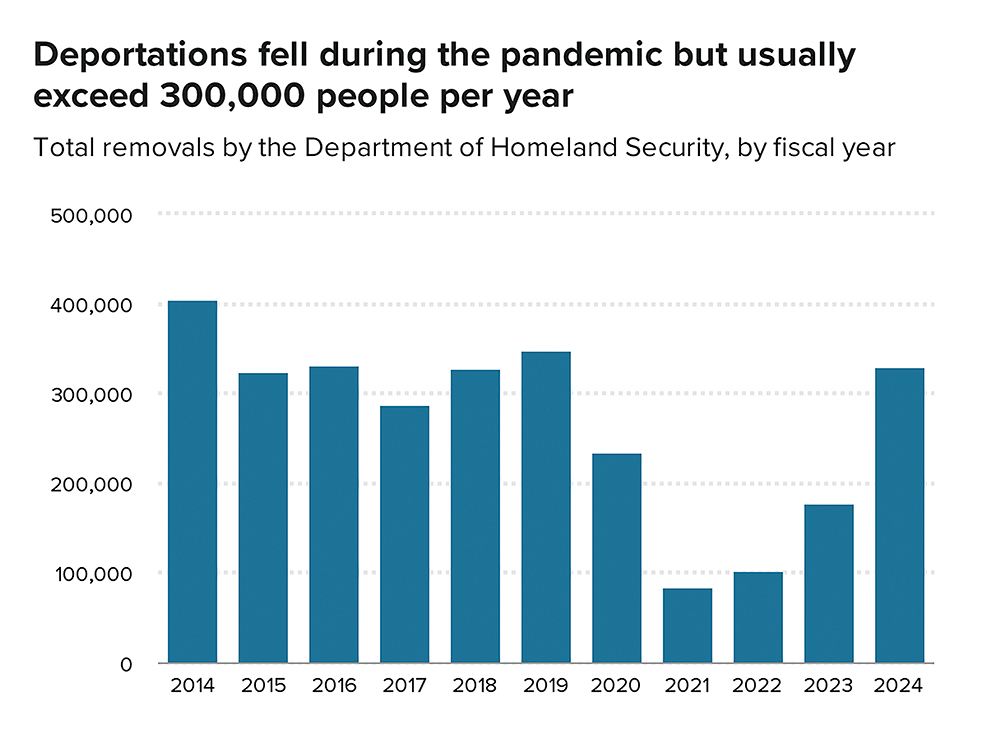
SOURCE: DEPT. OF HOMELAND SECURITY (2025A)
Preparation is key
Cassin Sharp said that all employers should have a checklist of items to ensure that they can address federal government questions if their workforce is audited. This includes having a completed I-9 form for every employee. The enforcement of immigration policies under the Trump Administration may still motivate some employers to steer clear of hiring foreign nationals for specialized positions to avoid risk, she added.
“But those workers also have special skills than can help,” she said. “There’s a stigma now. Everyone knows that ICE can show up at your door and request an I-9 audit or conduct a raid. It shouldn’t be discriminatory though.”
In addition to having the proper paperwork, employers should develop a plan that addresses what to do if there is an ICE raid. Any employer who has or is likely to have foreign workers should seek guidance from legal counsel experienced in immigration since H-1B is under such a microscope, Cassin Sharp said.
“Pursuing or registering employees on your own is a risk,” she said. There’s increased scrutiny regarding adjudication. You have to be on alert. There’s a lot we still don’t know about the impact of these recent changes. More are coming.”



